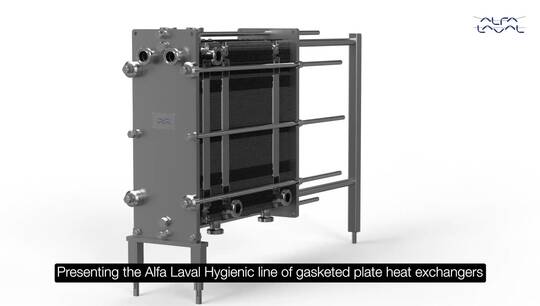
The idea and function of the plate heat
exchanger has been pretty much the same
since its conception in the 1920s.
The plates, on the other hand,
have seen big improvements.
The biggest changes have been to thickness
and plate patterns.
Before plates were very bulky and heavy,
and they needed to be because they relied
on their thickness for strength.
But with innovations in the plate
patterns came better structural integrity,
which made it possible to use much thinner
plates without losing strength.
Thinner plates meant higher efficiency, smaller
units and more sustainable manufacturing.
Great benefits that we are continuously improving.
Thin plates have been a staple of industrial
applications since the early 80s,
and with continuous development,
the hydraulic shock resistance
and mechanical strength of the plates
have been improved.
Going from 0.7 to 0.5 millimetres in thickness
might not sound that much.
But it really adds up:
30% less material per plate,
and the increased efficiency also
means fewer plates per unit.
This results in a lot less steel, which means
less resources and less emissions.
We have come a long way since the
1920s and we will continue improving.
Every step matters in our race
towards net zero emissions.